Cartoon Stories: A Display Font Built for Small Business Branding
If you run a small business, you know that every detail matters. From the color of your logo to the paper your business cards are printed on, people absorb your brand through small visual cues. One of the most overlooked details is the typeface you choose. That is where Cartoon Stories comes in. This is not just another decorative font. It is a display typeface with a playful, bold personality that can help your brand stand out while still looking professional and intentional. For business owners who want to communicate charm, creativity, and warmth without sacrificing clarity, Cartoon Stories offers a surprising amount of versatility.
What Makes Cartoon Stories Different from Other Display Fonts
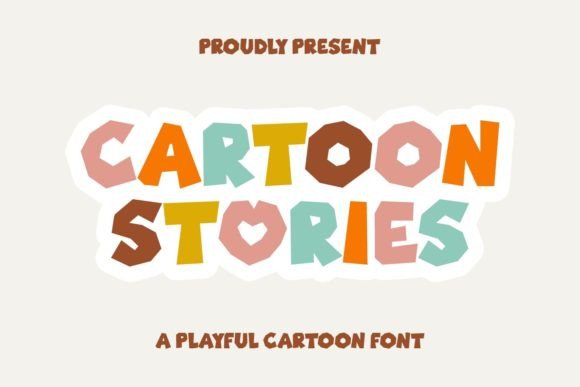
Many display fonts are either too whimsical to read or too rigid to feel friendly. Cartoon Stories strikes a balance between cutesy precision and bold confidence. Each letterform carries a handcrafted feel, as if someone drew it with care, yet the shapes are consistent enough to use across multiple brand materials. The font has a rounded, approachable quality that makes it feel accessible, but it also has enough weight and structure to hold its own in a logo or on a product label. This combination of charm and authenticity is rare in the world of display fonts. It does not try to be overly polished or sterile. Instead, it feels genuine, which matters more than ever to customers who are tired of generic corporate branding.
Where Cartoon Stories Shines in Your Business Materials
As a small business owner, you produce a lot of content. Labels, packaging, social media graphics, website banners, menus, flyers, thank-you cards, stickers, and business cards all need to communicate your brand identity. Cartoon Stories works well in any of these contexts because it is designed to grab attention without overwhelming the reader. Use it for your logo if your brand is playful and approachable, like a bakery, a children's clothing shop, a handmade candle company, or a boutique café. The font's bold strokes ensure that your logo remains readable at smaller sizes, which is critical for packaging and social media profile pictures.
For product labels, Cartoon Stories can be used as the primary font for the product name, paired with a clean sans serif or serif font for ingredients or descriptions. On a candle jar, the font's rounded letters feel warm and inviting, which matches the cozy atmosphere many candle brands want to create. On a beauty product label, it adds a touch of whimsy that sets you apart from minimalist competitors. If you run a coaching business or a creative service, use Cartoon Stories for your website headline or a key call-to-action banner. It signals that you are approachable and human, not robotic or distant.
How the Right Font Builds Trust and Recognition
Consistency is the foundation of brand recognition. When you use the same typeface across your website, packaging, social media, and printed materials, customers start to associate that visual style with your business. Cartoon Stories gives you a distinctive look that is hard to forget. It is not a generic sans serif that blends into the background. It has personality, and that personality becomes part of your brand story. Over time, people will see those rounded, bold letters and immediately think of your products. That kind of recognition builds trust because it signals that you are intentional about your brand and that you care about the details.
Professionalism does not have to mean boring. Many small business owners worry that using a playful font will make them look amateurish. But Cartoon Stories is crafted with enough precision to feel deliberate. When you use it consistently and pair it with clean supporting fonts, your materials look cohesive and polished. Customers will notice the difference between a brand that throws together random fonts and one that uses a carefully chosen typeface system. That attention to detail tells people you take your business seriously, even if your brand voice is lighthearted and fun.
Practical Tips for Using Cartoon Stories in Your Brand
Before you apply Cartoon Stories to every surface, take time to test it in real-world contexts. Print a sample label, create a mockup of your website banner, and see how it reads on a mobile screen. Because it is a display font, it is best suited for headlines, logos, and short phrases rather than long paragraphs. Use it as your hero font to grab attention, then pair it with a simple sans serif like Open Sans, Lato, or Montserrat for body text. This combination keeps your materials readable while maintaining the playful energy that Cartoon Stories brings. If your brand leans more traditional, consider pairing it with a clean serif like Merriweather or Playfair Display to balance the whimsy with a touch of elegance.
On social media, Cartoon Stories works beautifully for Instagram story titles, quote graphics, and product announcement posts. The bold letters stand out in a busy feed, especially when you use a contrasting background color. For Pinterest, use it in pin titles to catch the eye while scrolling. On your website, reserve it for your main heading and perhaps a few subheadings, but let a simpler font handle the navigation and body copy. This way, you get the personality without sacrificing usability.
Readability Considerations for Real Business Use
One concern business owners often have about display fonts is readability at small sizes. Cartoon Stories handles small labels and mobile screens reasonably well because its letterforms are open and the strokes are consistent. However, you should always test it at the actual size you plan to use. If you are printing on a small jar label or a business card, make sure the font is large enough to read comfortably. For digital use, check how it looks on a phone screen. As a general rule, use Cartoon Stories for text that is 18 points or larger in print, and for headings that are at least 24 pixels on the web. For anything smaller, switch to your supporting font to maintain clarity.
Licensing: What Small Business Owners Need to Know
Before you finalize your branding, check the commercial licensing for Cartoon Stories. Using a font on your products, packaging, templates, merchandise, client work, or digital downloads often requires a commercial license. Many premium fonts come with standard licenses that cover most small business needs, but if you plan to sell products with the font embedded in the design, or if you want to use it in logo designs for clients, make sure you have the appropriate rights. This is a small step that protects your business from legal issues down the road. Always read the license agreement carefully, and if you are unsure, reach out to the font creator for clarification.
Making Cartoon Stories a Core Part of Your Brand Identity
Building a brand is about making choices that align with your values and your customers' expectations. Cartoon Stories is a creative font that works best for businesses that want to communicate warmth, approachability, and a sense of fun. It is not the right choice for a law firm or a financial consultancy, but it is an excellent fit for bakeries, handmade product shops, children's brands, beauty and wellness lines, boutique cafés, and creative service providers. When you choose a font that matches your brand personality, everything feels more authentic. Your customers can sense that alignment, and it makes them more likely to trust you and remember you.
Try Cartoon Stories on a few key pieces first. Use it on your logo, your product packaging, and your social media templates. See how it feels in your hands and on your screen. If it resonates with your vision, build your brand around it. A font like this is more than a design asset. It is a tool for connection, and for small business owners, that connection is everything.